
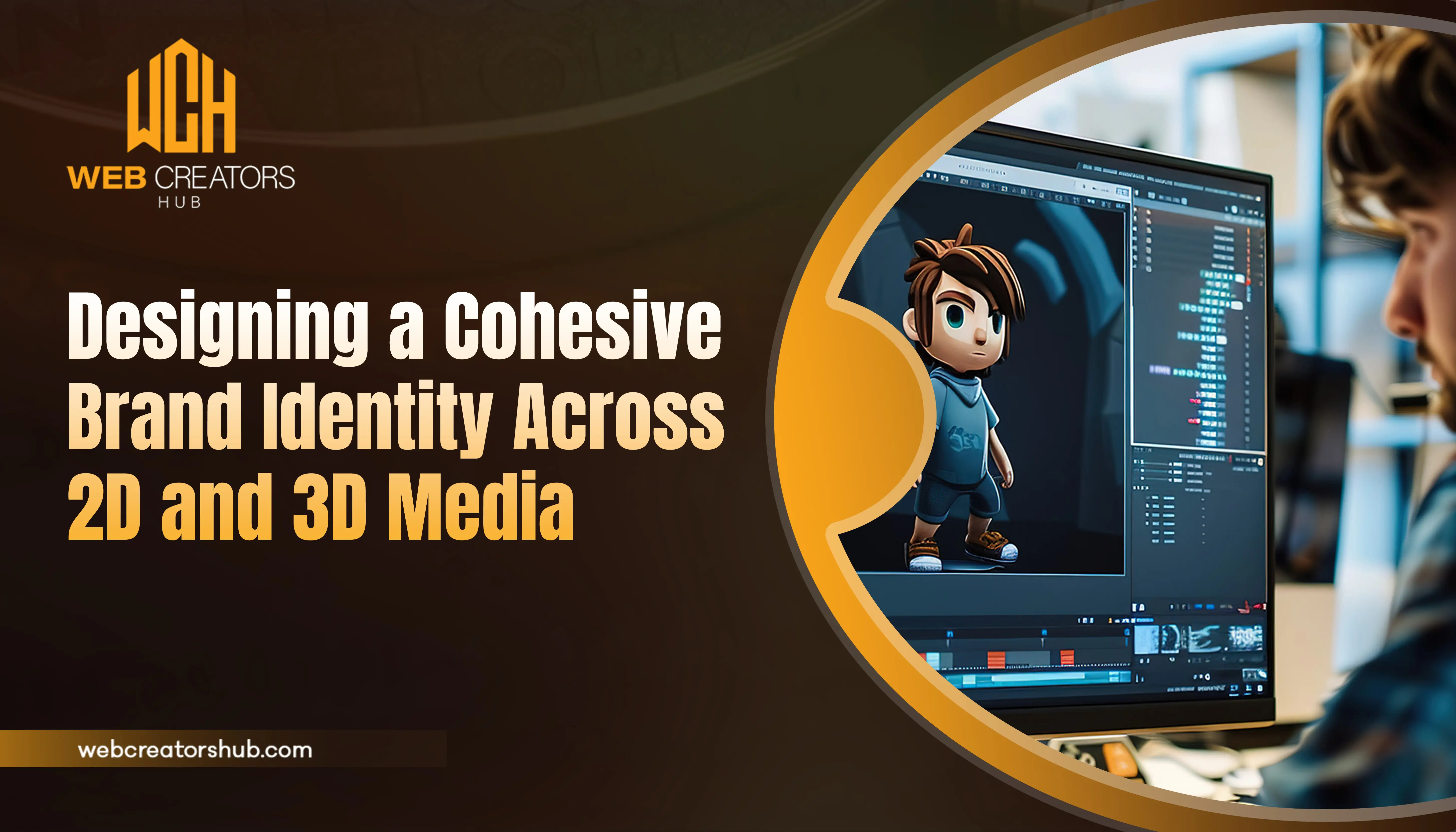
Today, it's not enough for brands to just look pretty. They need to make sure their look is consistent across all platforms and media. Whether a brand lives on a flat 2D social media post or inside an immersive 3D environment, the essence should remain unmistakable. Creating a strong brand identity that seamlessly transitions between both formats requires strategy, creativity, and precision.
People see brands in lots of ways now, scrolling through Instagram, looking at websites, viewing product demos, or playing with 3D product models. If all these things feel like they're part of the same thing, trust grows. When they don't, the brand feels fragmented.
This is where visual consistency becomes a powerful advantage: a cohesive brand identity means that colors, fonts, shapes, and tone bear not only the same meaning but also the same emotional impact, whether they are used on a business card or on a 3D product render.
Every memorable brand starts with the fundamentals: the design of the logo, color, font, and graphic style. These 2D elements provide the basis for all that will later be adapted into 3D.
A scalable, flexible logo design is of primary importance: a logo that works beautifully on a flat background should translate into 3D space with ease. Simple, bold shapes convert very well into 3D, but if a design is too detailed, it might not look so good when you give it depth.
When you have a good 2D brand setup, changing it into 3D is easier because you already know how the brand should look and feel.
It is very important, when working in 2D and shifting to 3D, to consider depth, lighting, textures, and motion. These things make it seem real, but they still need to match the main feel of the brand.
A cohesive brand identity is when these details feel intentional and connected, not random or overly experimental.
Create a single style guide that outlines specifications for 2D and 3D use.
A strong brand identity today needs to live with confidence in both 2D and 3D spaces. When the colors, logo, fonts, and visual consistency speak cohesively in all environments, the brand becomes easy to spot and more reliable. That's what designing with intention is all about. And when brands look for professional help to get to this point of cohesion, many reach out for Web Creators Hub, for the simple, consistent, and human-centered branding will always stand out.
Fill out the form below, and we’ll get back to you at the earliest possible.
© Web Creators Hub . All Rights Reserved.

At Web Creators Hub, we're here to fuel your creativity and provide a helpful platform for turning your concepts into reality. Join us today!


